A wake in Melbourne’s west is usually arranged in the same week as the funeral, and the part most often missed is the length of the booking. Two Victorian cemetery trusts publish a ninety minute window for a function room hired after a service, and a venue away from the cemetery sets its own terms. Settle the finish time first.
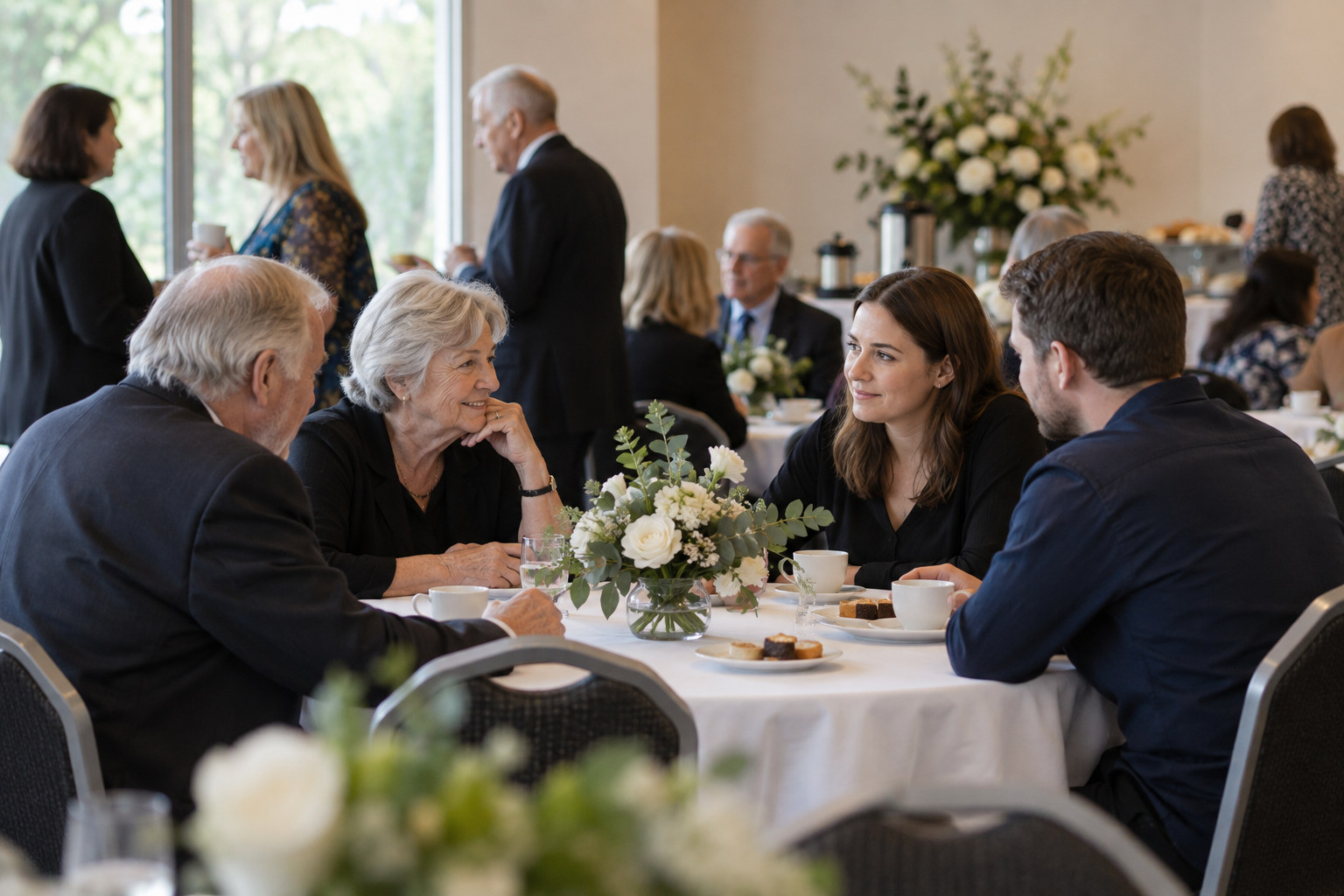
The length of a wake is set by the booking, not by the gathering. If you are the son or daughter arranging it, you are working to a date somebody else set, in the week after a death.
At a cemetery the room usually comes as a fixed block. The Greater Metropolitan Cemeteries Trust runs Altona Memorial Park in Altona North. Its page for the room there says hire ‘includes exclusive use of the function room for 1½ hours’. Its commemoration centre at Glenroy publishes the same inclusion in the same words. So that is how the trust hires rooms. The Southern Metropolitan Cemeteries Trust is a separate trust. Its own guidance on holding a wake says ‘each function booking includes 90 minutes from the scheduled start time’. All three pages were read on 26 September 2026.
Ninety minutes is shorter than it sounds. The room is booked from a start time, not from when you arrive. A service can run late, and people reach the room in ones and twos. A quarter of the booking can go before the tea is poured.
The honest half sits on the same page. The southern trust follows its ninety minute line with this: ‘If you need a little extra time, this can be arranged during the booking process.’ So the window is what a booking includes, not a rule about when everyone leaves. The asking belongs to the booking, and it is the part that gets forgotten.
Three pages from two trusts is what was checked here, so that is their term rather than every venue’s. Settle the finish time before you tell people a time.
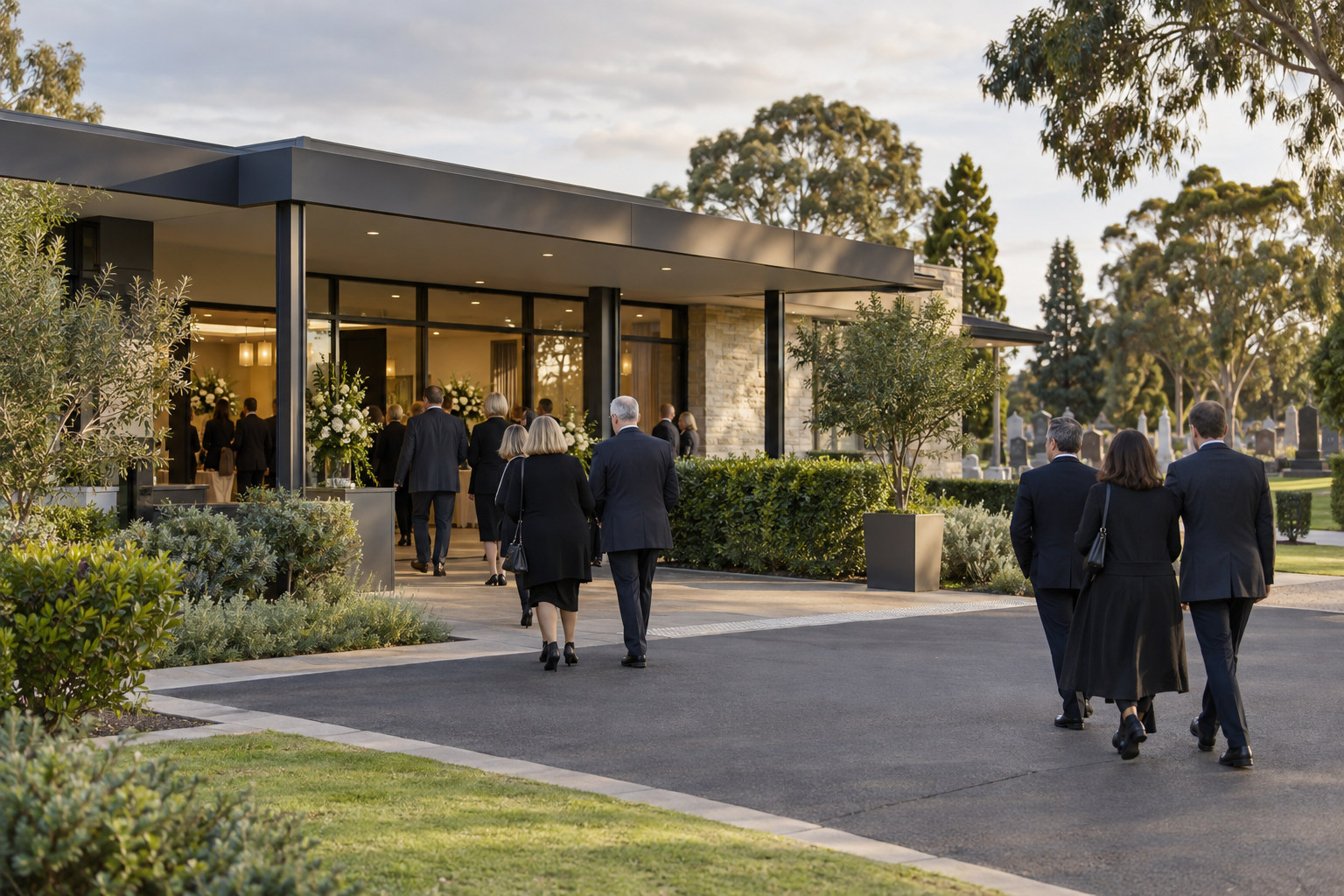
The choice is between one address and two. A room at the cemetery keeps the day in one place. Nobody drives twice. At Altona Memorial Park the trust says bookings are managed through its caterer. The room can be arranged alongside the service. The time is defined, which suits some families and not others.
A room somewhere else costs you a drive. People who do not know the area follow the car in front and lose it at the lights. Some will not come at all, because the second leg is the easy thing to drop. Write the directions for somebody who has never been to the suburb, because one landmark and one turn beats a map link.
What that buys is time. A separate venue is not working around another service arriving behind yours, so the afternoon can run as long as it runs. Booking well ahead is the normal advice for a function room. A wake is the exception, because the date comes from the funeral.
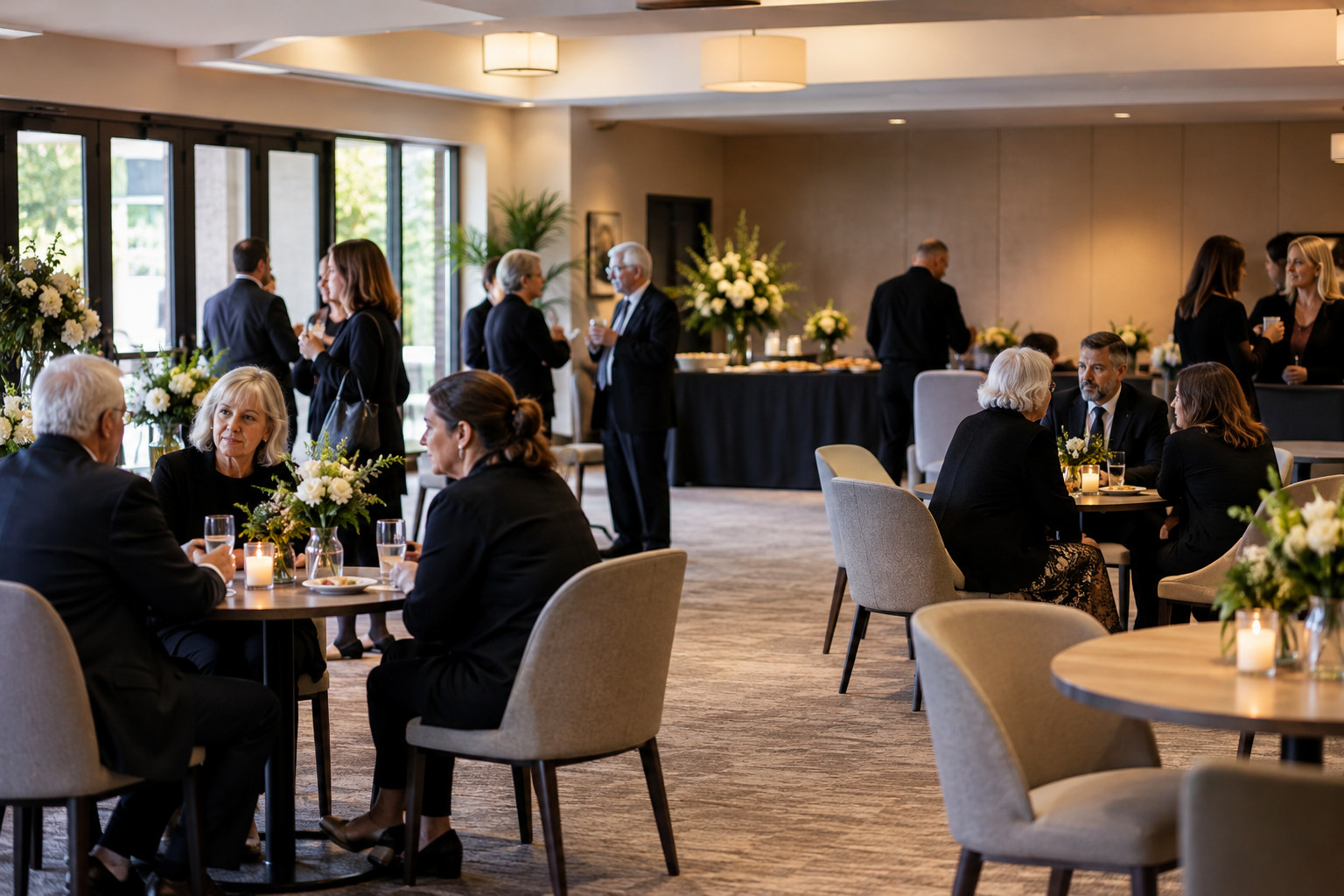
Nobody knows, and that is the honest answer. A wake is the one gathering people do not reply to. Some who missed the service come to the room. Some stay twenty minutes. Workmates arrive at the end of a shift, after the sandwiches have gone.
The published figures show the shape of it. At Altona Memorial Park the trust lists its Chapel of Repose at ’80 guests (seated)’ and its Chapel of Peace at ’60 guests (seated)’. It lists the reception room at the same park at ‘160 guests’. The room after the service is listed to hold twice what the larger chapel seats. That is the trust’s own sizing, not a prediction about your family.
So give the venue a careful number rather than a hopeful one. Ask when the final count is due, and what happens if more people come.
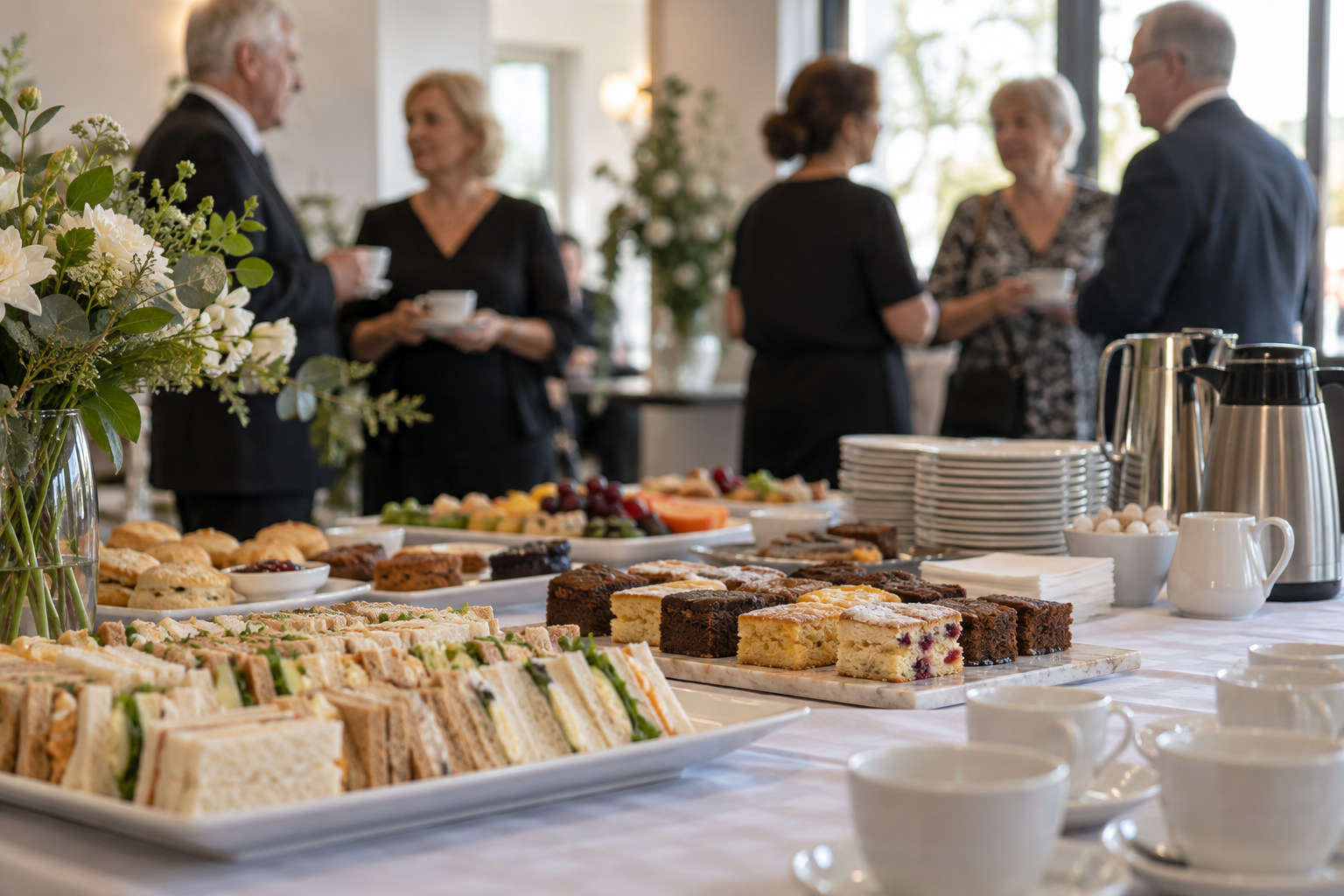
Plain food, and enough to hold people for as long as you want them to stay. Sandwiches, slices, tea and coffee at one end. A bar and something hot at the other. An hour and a half of tea is a much smaller job than an afternoon with a bar.
Two things families assume they can do, and cannot always. The southern trust asks for menu selections at least 48 hours before the function. A final choice the night before does not work there. The same trust says it cannot take BYO food or drink, citing health and safety regulations and liquor licensing. Other venues set their own terms, so ask rather than assume.
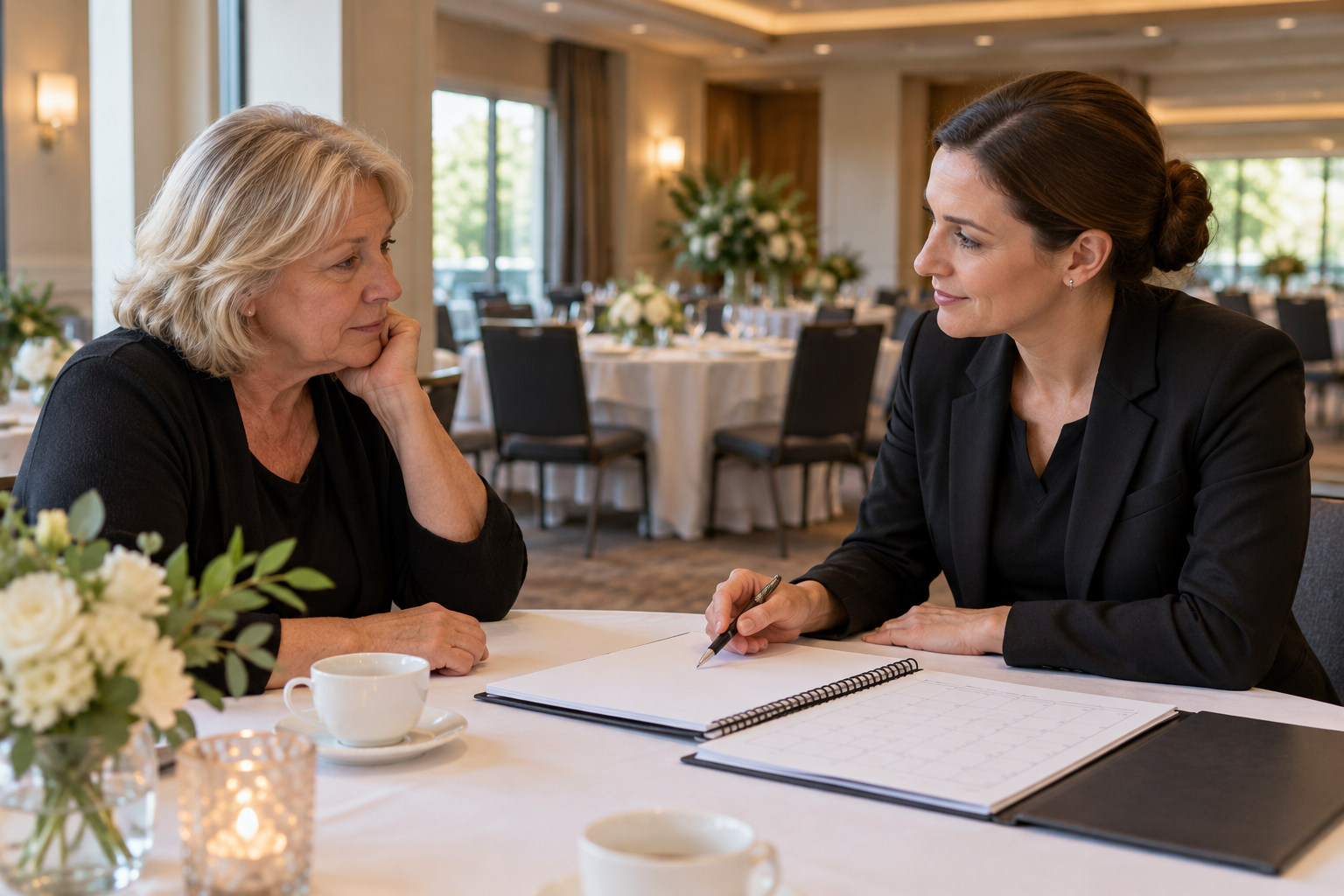
The general questions to ask before you pay a deposit are covered separately. These are the ones a wake adds.
Ask them in one call and write the answers down.
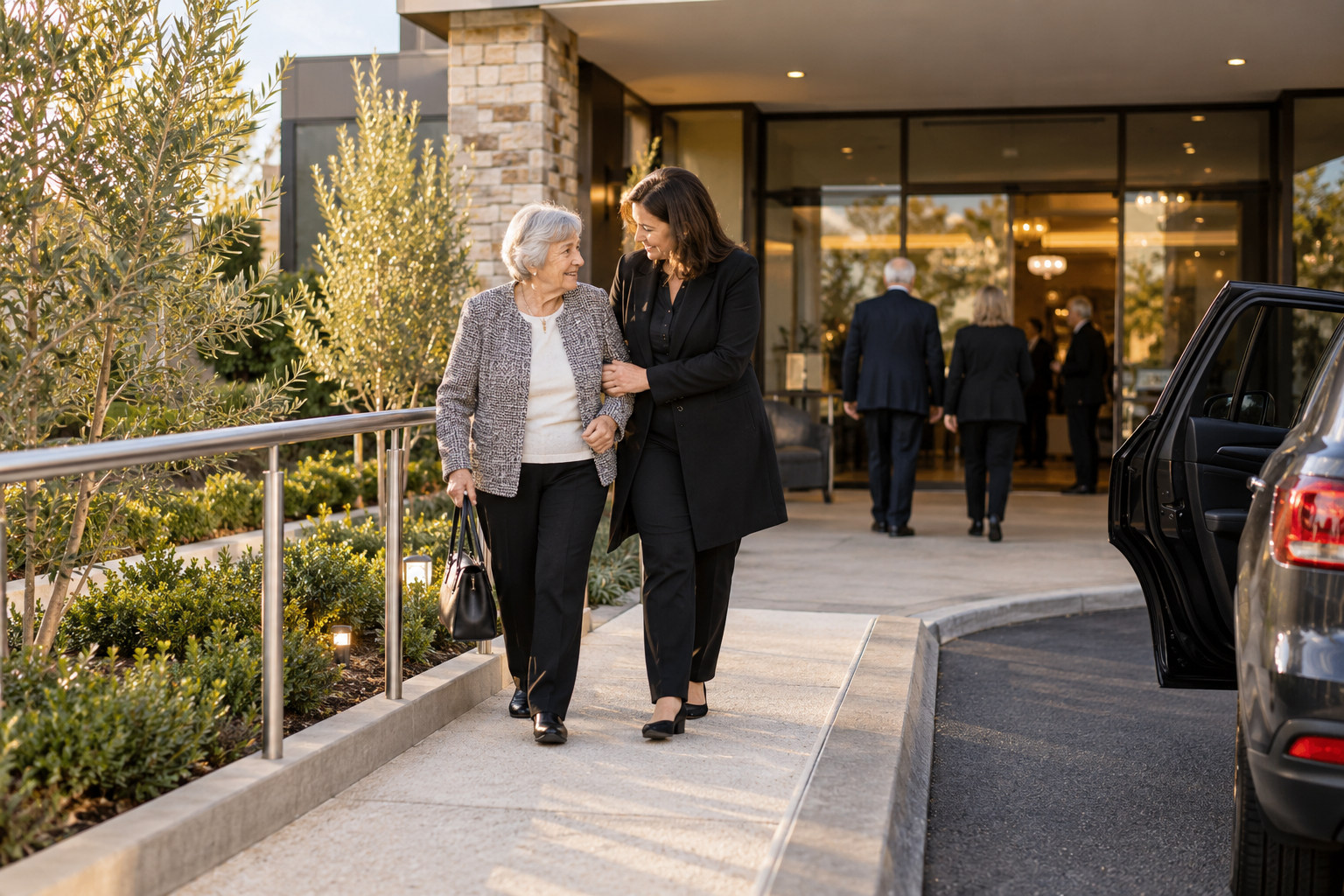
Guests at a wake are often older than at other functions. Several will be driven by somebody else, or come straight from the service in a line of cars.
So the useful questions are physical ones. Is the entrance step free? How far is the door from the car park? Is there somewhere to sit near the entrance? Keeping a mixed-age room comfortable through a long afternoon is a subject of its own. This part is narrower: getting people in, seated, and home again.
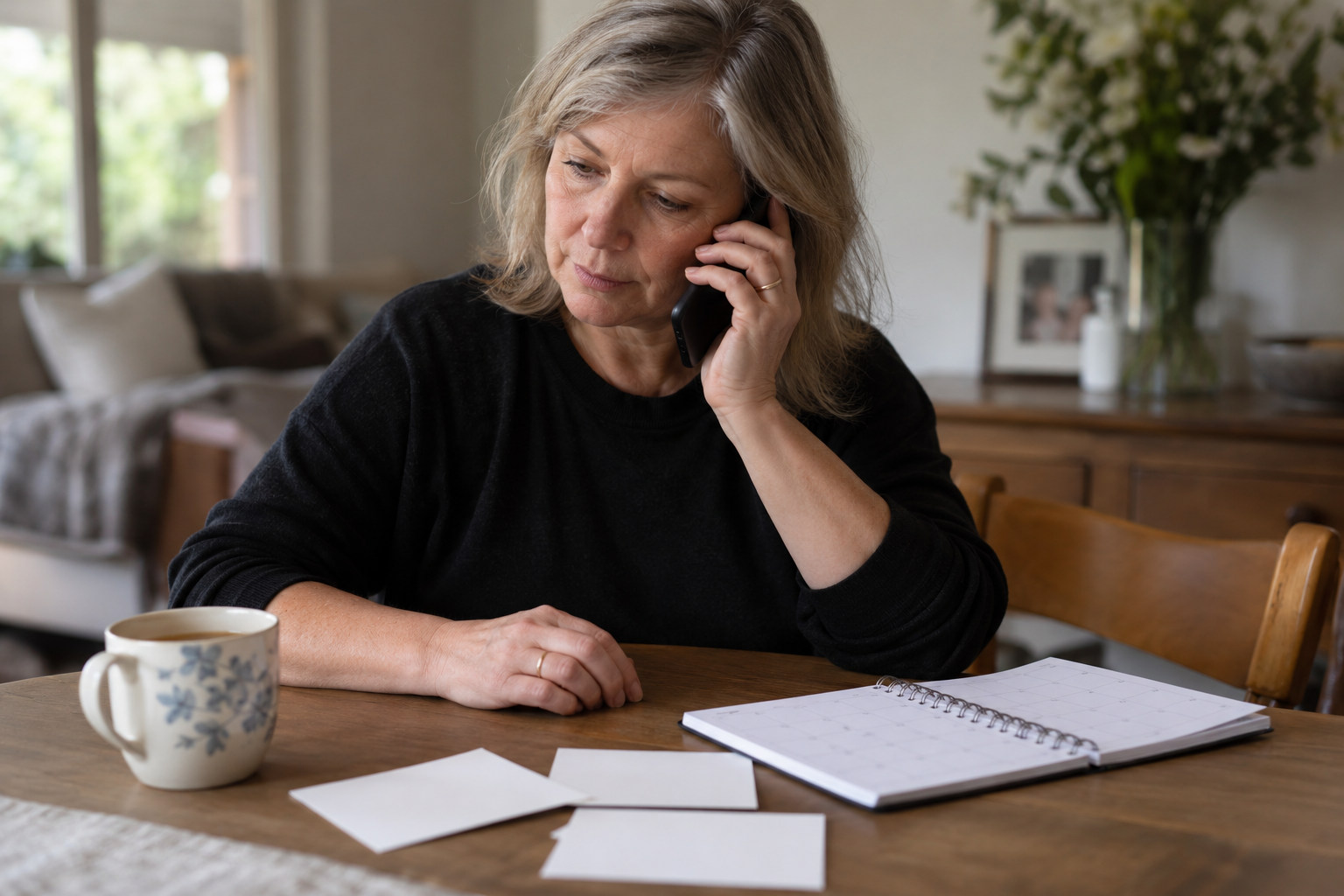
Have three things in front of you when you call: the date of the service, the time it finishes, and a rough number of people. Those three decide what is possible.
Then ask one thing people rarely think of: whether the room can be held while the funeral director confirms the date. A short hold costs nothing.
Parking is worth raising early too. Altona Sports Club has more than 100 car spaces at its venue. That matters in the first ten minutes, when a line of cars arrives together. The functions page carries the phone number and the email.
That depends on the booking more than on the family. Both trusts checked here put ninety minutes in a room hire, and one says a longer window can be agreed at the booking.
Neither wins outright. One address suits a family who do not want a second drive. A separate room suits one who would rather leave the end of the afternoon open.
No published figure covers it, because a wake has no guest list to count from. Give the venue a considered estimate, then check how late that estimate can change.
At a cemetery room the block is part of what the hire includes. Where more time is possible, it is agreed at the booking rather than requested on the day.


