
Touring four wedding venues in a single Saturday seemed like a good idea on Tuesday. By the third stop, you can't remember whether the courtyard with the fairy lights was at venue two or venue three. The coordinator gave you the same warm spiel each time. The kitchens all looked roughly the same. And now you're parked outside venue four with no clear shortlist and a partner who has stopped asking questions.
Most couples shortlisting wedding reception venues in Melbourne's west arrive with enthusiasm and no system. They take phone photos, nod along to the tour patter, and leave each visit feeling vaguely positive without knowing why. The result is a comparison you can't really make.
This article is the framework most couples wish they'd had before their first tour: how many venues to see, what to ask before you turn up, what to look at in the room, and what to do with everything you've learnt by the time you're back in the car.
How many wedding reception venues in Melbourne's west should you tour?
Three to five is the sweet spot. Fewer than three and you don't have enough to compare. More than five and the venues blur, the small differences stop registering, and you make the call based on whichever tour came last rather than which space fits the day you want.
Order matters too. Don't tour your top pick first or last. First means you'll measure every later venue against it and dismiss them too quickly. Last means fatigue sets in and you'll judge it more harshly than it deserves. Slot the favourite into position two or three, when you're warmed up but not worn out.
Triage before you tour. If your list has eight or nine venues, cut it before you book a single visit. Most can be ruled out from their website, a phone call, and a written reply to the questions in the next section.
What to ask before you book the tour
Save your Saturdays. Send a short email or use the enquiry form to clear deal-breakers before you commit to driving across town. A venue that takes three days to answer simple questions will take three days to answer harder ones once you're under deposit. Items to clear in writing first:
- Capacity confirmation in writing. Not 'we can fit your group' but written confirmation the venue handles your guest count seated, on the dance floor, and during speeches.
- Exclusive use, or shared. Some venues run two events at once. If you want the bar and the outdoor space to yourselves, confirm it before the visit.
- What's included as standard. Tables, chairs, linen, glassware, AV, microphone, cake table, easels. Get the list before the tour, not after.
- Ballpark pricing structure. Per head, room hire plus catering, or minimum spend. You don't need a final quote yet, just a sense of whether you're in the right band.
- Dates in your window. No point falling for a venue that can't host you in the month you want.
A venue that won't answer these in writing before the tour is telling you something. The information gap doesn't close after the tour. It usually gets wider.
What to look at once you're in the room
Most tour patter is about what the venue offers. Your job is to look at what the venue is. Walk the room slowly. Picture 100 people in it. Most of what couples miss isn't subtle; it's just easy to overlook when someone is talking next to you. Specific things worth checking:
- Natural light at the time your reception will run. Most tours happen mid-morning. A 6pm reception looks entirely different. Ask whether you can come back at sunset before deciding.
- Sightlines from the back. Stand in the furthest corner and see whether you can clock the dance floor and the head table. Pillars and level changes matter more than you think.
- The bathroom. Walk in. Count the cubicles. A venue for 130 guests with three toilets between two bathrooms will create queues during speeches.
- The bar layout. Where it sits relative to the dance floor and the seating affects flow. A bar tucked behind a wall slows service and creates pinch points.
- Kitchen-to-floor distance. Plates that travel further get colder. If you can't see the kitchen on the tour, ask where it is.
- Ceiling height and power points. Low ceilings make rooms feel crowded once decorated and full. Power point locations matter for DJs, photo booths, dessert tables, and cake displays.
- Accessibility from the carpark. Older relatives, mobility-limited guests, anyone in heels on gravel. The path from car to room matters more than the marketing photos show.
Take photos of all of it, not only the pretty corners. The pretty corners are on the venue's website already.
Questions to ask that venues don't volunteer
Venues are happy to talk about what's included. They're less forthcoming about what costs more, what isn't included, and what happens after you've signed. Ask these out loud before you put down a deposit, and ask for the answers in writing.
- Minimum spend, in writing. Most venues have one. It can change by date, day of the week, and season. Get the figure for your specific date.
- Vendor restrictions. Are you free to bring your own photographer, florist, celebrant, cake, or DJ? Some venues use preferred-supplier lists. Some charge a fee if you go outside the list. Cake-cutting fees exist and they're worth asking about up front.
- What happens at the end of the night. Lockup time, security, where guests wait for taxis or rideshare, whether music has to stop earlier than the reception ends. Couples discover the 11pm curfew at 10:30pm and it's a bad time to find out.
- Who you deal with on the day. The coordinator who showed you around may not be the person running your night. Ask who will, and whether you can meet them before the wedding. If a venue can't tell you, that's a flag.
- The wet weather plan. If any part of your reception is meant to be outside, ask what the venue does if the forecast turns. Some have a real plan. Some have a tarp in a cupboard. Our companion article on outdoor wedding receptions and weather covers what good Plan B's look like.
- Whether the quote holds. Some venues build in CPI increases between deposit and the event. Some lock prices at deposit. Get the answer in the contract.
What good function venues in Melbourne's west do that average ones don't
The difference between a good function venue and an average one is rarely the room itself. It's the systems around the room. Good venues reply to enquiries with a written quote inside 24 hours, allocate a dedicated event coordinator from booking through to bump-out, have a real Plan B for weather, and have enough parking for your guest list without sending half the wedding party two streets away.
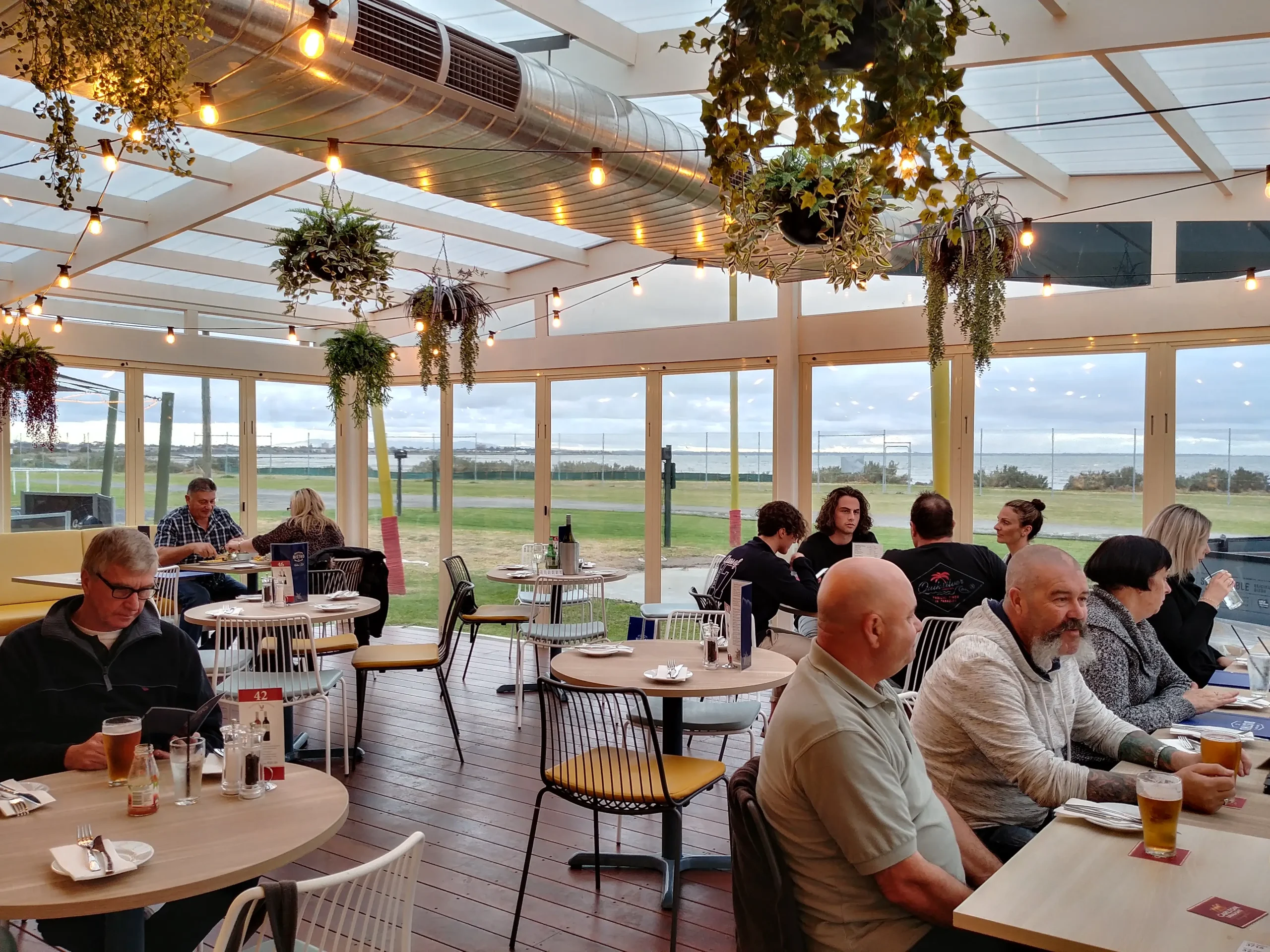
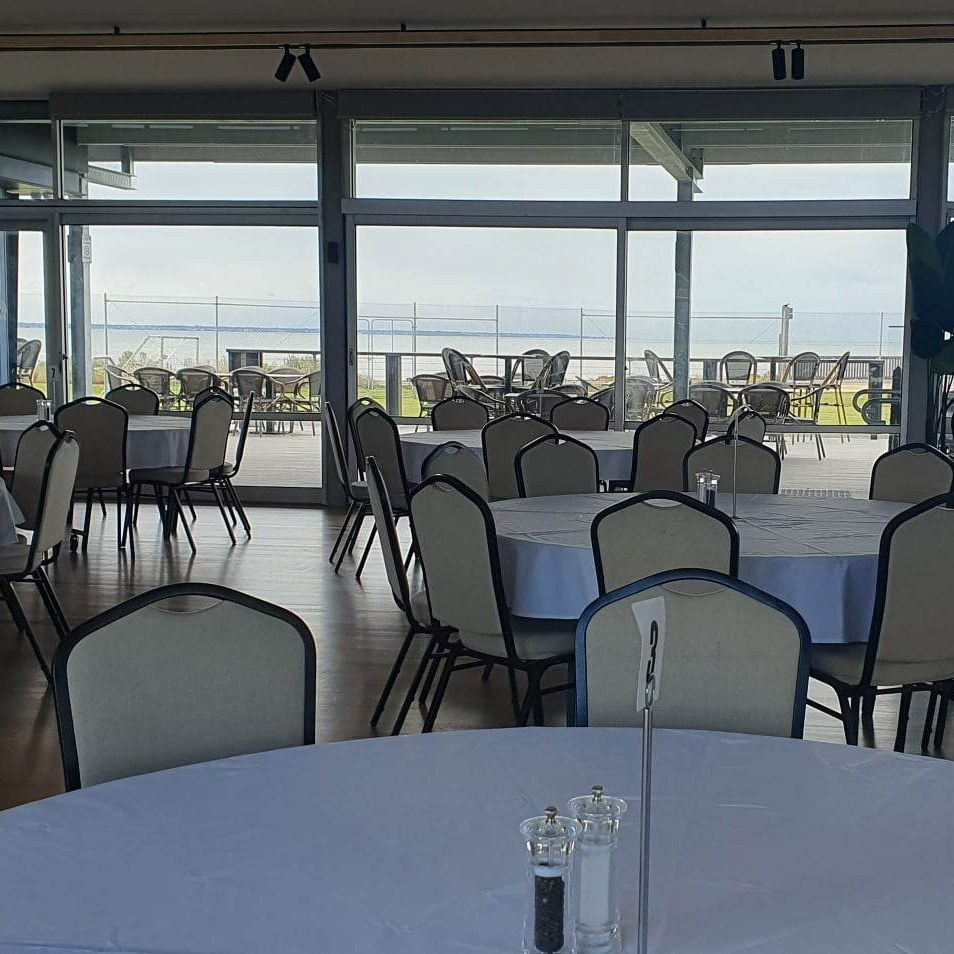
The Waterfront Reception Room at Altona Sports Club, on the Port Phillip Bay frontage, is a worked example. The space has 100+ on-site car spaces, and a covered alfresco deck that works as a wet-weather alternative for drinks or a ceremony, not a corridor with a roof. That's what a well-run function space looks like in practice: a layout that changes with the format, parking that matches the headcount, a Plan B you can stand under during the tour itself.
During a tour, you can usually tell which venues run on systems and which run on goodwill.
After the tour: comparing notes
By Sunday night, the details of three or four wedding reception venues blur together. The room with the lift, the one with the photo wall, the one with the back deck. A simple side-by-side beats relying on memory.
A working comparison table looks like this:
| Venue | Capacity confirmed | Included in price | Vendor restrictions | Plan B for weather | Notes |
|---|---|---|---|---|---|
Fill it in the same evening, while the visits are still fresh. In the final column, note the one thing about each venue you'll remember tomorrow. That's usually the thing that decides the choice in the end.
If two venues come out close, do a second visit to the front-runner. The second visit is more useful than the first because you know what to look at.
Frequently asked questions
Yes, with the right venue. A heated, covered alfresco space backed by a full indoor reception room handles winter receptions well. Daylight hours are short between June and August, so plan for an earlier ceremony or strong outdoor lighting. A still cool evening is often more pleasant than a wet windy spring afternoon.
Most hired marquees in Australia are engineered for sustained winds in the 40 to 60 km/h range, depending on size and anchoring. Above that range the structure becomes a safety concern, not just a comfort one. A 60 km/h southerly off Port Phillip Bay is not unusual in summer, so for waterfront marquee setups in Melbourne’s west, ask the supplier for the wind rating in writing.
The call on whether to go outdoor or indoor is usually made 24 to 48 hours before the wedding, when the forecast firms up. Some venues will hold the call until the morning if the forecast is borderline, but the indoor layout should already be set up by that point so the changeover takes minutes, not hours.
At a venue with a real Plan B, no. The wet weather layout uses spaces the venue already has and staff who are already working the event. If a venue quotes an additional fee for switching, treat that as a sign the plan isn’t built in. The contract should explicitly confirm there’s no extra cost.
Ask any venue you’re touring how they handle a borderline forecast. The strongest answer is that the indoor space is prepped overnight as the default and the outdoor area is set up additionally if the morning forecast clears. The indoor reception is always ready, and the outdoor element is treated as a bonus rather than an assumption.
Walk through any venue’s wet weather plan in the room, not on a floor plan. Ask the coordinator to show you the changeover, not describe it. Get the plan written into the contract before the deposit goes across. If you’d like to walk through the Waterfront Reception Room and its covered alfresco deck with one of the events team, you can request a tour through the Altona Sports Club functions page.
Locking in a date
Once your shortlist of wedding reception venues comes down to one, the next move is a date check. Available dates shift weekly during peak booking months, and the Saturday you toured for isn't the Saturday you'll get if you wait three weeks to decide. Email the venue, ask what's free in your window, and ask for a written hold while you finalise the contract.
The events team at the Waterfront Reception Room can confirm availability and walk you through the next step. Send a short enquiry with your guest count, preferred month, and the pre-tour questions above. You'll have most of what you need to make the decision before the second visit.


